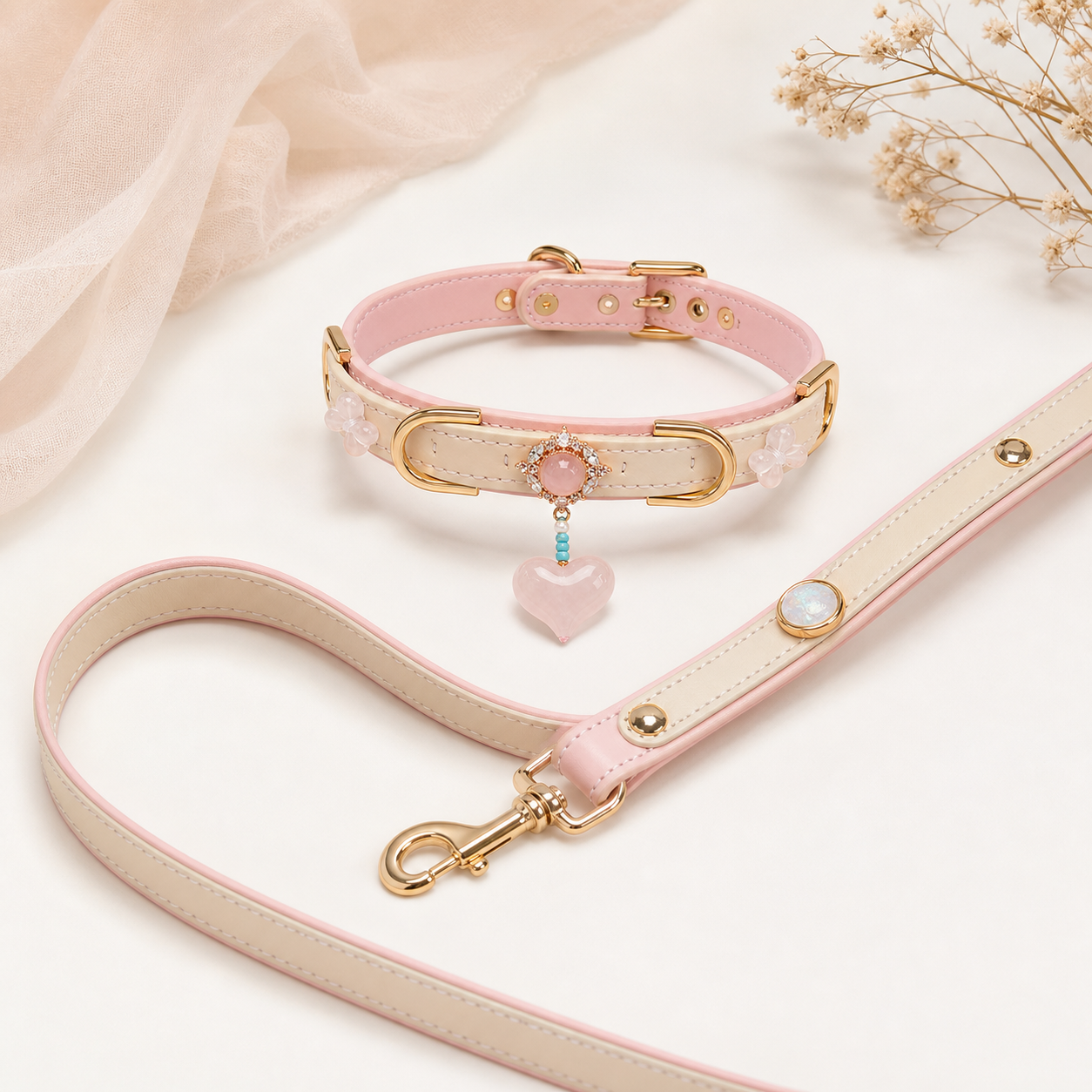
Collar and leash play can create a strong sense of attention, connection, role, or ritual. It also places equipment close to the neck, where careless force can cause serious harm. The safest approach is visually expressive but physically gentle: a well-fitted collar, a slack leash, clear communication, and no pressure on breathing or blood flow.
Quick answer: agree on the scene before attaching a leash, inspect the collar and hardware, keep the leash visibly slack, hold it as a communication prop rather than a control device, and stop immediately if the wearer experiences pain, dizziness, numbness, difficulty swallowing, or shortness of breath.
What is collar and leash play?
Collar and leash play is a consensual adult activity in which a leash is attached to a collar as part of role-play, posture, symbolism, or movement. For some people, the leash is mostly visual. For others, it creates a shared cue for pace or direction.
The leash should not be used like a restraint around the neck. Never jerk it, yank it, suspend body weight from it, use it for choking, or attach it where a fall could tighten the collar.

How do you choose a safer collar for leash play?
Start with fit. The wearer must be able to breathe, speak, swallow, and turn the head normally. The collar should not press into the front or sides of the neck, and the attachment point should sit flat without sharp edges.
- Comfortable lining: smooth contact surfaces reduce rubbing during short, supervised wear.
- Reliable closure: the buckle or clasp should stay secure but remain easy to reach.
- Sound hardware: check rings, clips, rivets, stitching, and decorative chains before every use.
- Appropriate width: wider does not automatically mean safer; fit and placement still control comfort.
- Fast removal: keep the buckle, key, or required tool immediately accessible.
Do not attach a leash to a decorative chain, charm, bell, jewel setting, or other component not designed as the connection point. If the correct attachment point is unclear, treat the leash as a separate visual accessory until you can confirm the product instructions.
What should partners negotiate before attaching the leash?
Discuss the intended role of the leash. Will it remain purely decorative? Will the wearer follow verbal cues while the leash stays loose? Is walking involved? Where will hands be placed? What movements are off-limits?
Agree on a safeword and a nonverbal stop signal before the scene. A nonverbal signal matters because someone may freeze, become quiet, or have difficulty finding words under stress. A dropped object, repeated hand tap, or clearly practiced gesture can work, provided both people understand it.
Also discuss mobility, balance, neck or spine conditions, dizziness or fainting history, medications, alcohol, and anything that could change awareness. When in doubt, leave the leash unattached and choose another form of role-play.
How should a leash be handled?
Keep a visible curve
The leash should hang in a clear U-shaped curve between the collar and the holder's hand. That visible slack makes it easier to confirm that no pulling force is reaching the neck.
Use verbal cues first
Ask the wearer to step, pause, turn, or kneel using words. The leash can accompany the cue without becoming the force that moves the body.
Stay within arm's reach
Short distance reduces trip hazards and allows immediate release. Do not wrap the leash around furniture, doors, rails, hands, or another part of the body.
Move slowly on clear flooring
Remove clutter, rugs that slide, sharp corners, and breakable objects. Avoid stairs, balconies, pools, showers, moving vehicles, outdoor traffic, or any place where a stumble could tighten the collar.
Release before changing activities
Unclip the leash before changing rooms, adjusting clothing, taking a break, or adding other equipment. Never leave a collared person attached and unattended.
What actions should never be done with a collar and leash?
- No jerking, snapping, yanking, or sudden direction changes
- No choking, breath restriction, carotid pressure, or “testing” how tight the collar can become
- No suspension, body-weight support, forced posture, dragging, or tying off
- No attachment during sleep, intoxication, driving, exercise, swimming, or unsupervised wear
- No attaching to a decorative charm or lightweight chain
- No continuing through pain, numbness, tingling, dizziness, confusion, swallowing trouble, or shortness of breath
If any warning sign appears, remove tension and take off the collar immediately. Seek appropriate medical help if symptoms are severe, persist, or involve breathing, consciousness, weakness, or significant neck pain.
How often should you check in?
Check fit before attaching the leash, again shortly after the scene begins, and whenever position or activity changes. Use direct questions such as “Can you swallow comfortably?” and “Do you feel any pressure, tingling, or dizziness?” A general “Are you okay?” can be harder to answer accurately.
Notice nonverbal changes too: altered breathing, unusual quietness, loss of coordination, skin color changes, rubbing at the neck, or difficulty focusing. Stop first and discuss second.
What should aftercare include?
Remove the leash before unfastening the collar. Check the skin for rubbing or pressure, offer water, and talk about what felt comfortable or distracting. Clean the collar and leash according to their material instructions, allow them to dry fully, and inspect the stitching and hardware before storage.
Record the collar setting that felt comfortable, but remeasure after major body changes or if the next experience feels different. Use the XESODIT collar sizing guide whenever you need to confirm fit.
Frequently asked questions
Can a leash be used to pull someone by the neck?
No. Keep the leash slack and use verbal cues. Sudden or sustained force near the neck can cause serious injury.
Can you sleep in a collar with a leash attached?
No. Remove the leash before resting, and do not leave someone attached or unattended. Straps can catch on furniture, bedding, or the body.
Is a D-ring always safe for leash attachment?
No. Confirm that the ring and surrounding construction are intended for the accessory. Decorative rings and chains may not be functional attachment points.
What is the safest leash length?
There is no universal length. Use only enough distance to maintain a deep slack curve while keeping both adults close, stable, and able to release immediately.
Does a matching leash mean it must be used?
No. Every XESODIT collar includes a matching leash, but attachment is always optional and requires its own consent and safety agreement.
Explore XESODIT collars and matching leashes
Browse the XESODIT collar collection. Each collar is hand-finished and includes a matching leash; please allow approximately two to three weeks for production and delivery.
Sources and further reading
This original safety-focused guide was informed by the general consent, equipment, and handling topics discussed in the Kink Codex collar and leash guide. XESODIT has independently written this article and applies a strict no-neck-force approach.