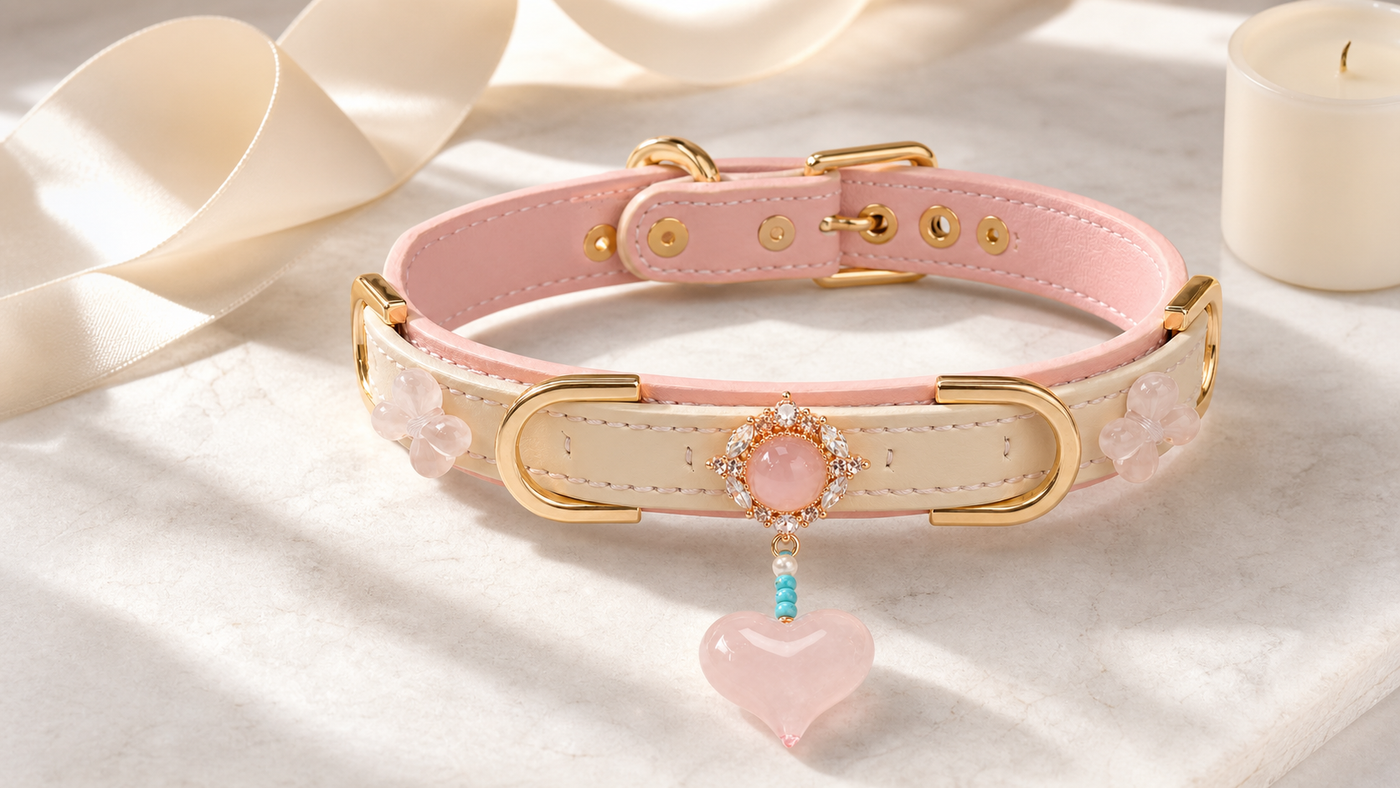
A collar can be jewelry, a private signal, a ritual object, or part of consensual play. Its meaning is never automatic: it comes from the people wearing and sharing it. This guide explains common BDSM collar types, how to choose a comfortable fit, and the conversations that help make wearing one feel intentional.
What does a BDSM collar mean?
In BDSM and kink communities, a collar may express trust, commitment, belonging, role, style, or simply curiosity. Some people reserve a collar for scenes. Others choose a discreet day collar that looks like everyday jewelry. A collar can also be worn without a partner as a form of self-expression.
The important point is that no design carries one universal promise. Before a collar is given or worn, talk about what it means, when it may be worn, who may touch it, and how either person can pause or end the arrangement. Consent should be informed, specific, freely given, and reversible.
Common types of BDSM collars
Day collars
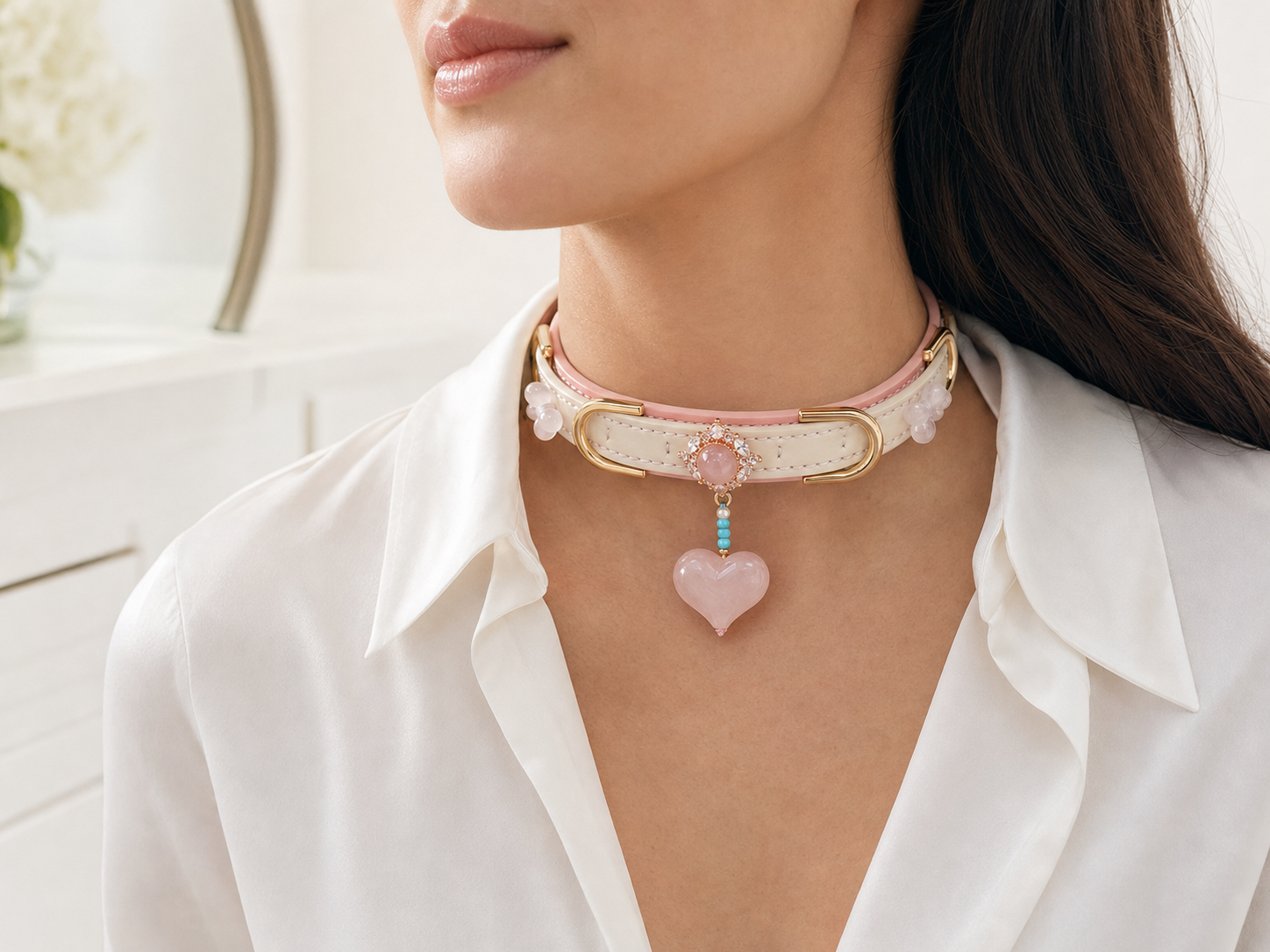
A day collar is designed to blend into daily life. It may resemble a necklace, slim leather band, or jewelry-inspired choker. For many wearers, its meaning is private even when the piece is visible in public.
Play collars
Play collars are worn for a scene or a defined period. They often prioritize easy adjustment, clear removal, and hardware that can accept a lightweight accessory. Their meaning begins and ends with the agreement between the people involved.
Consideration or training collars
Some relationships use a temporary collar while partners learn about compatibility, expectations, and boundaries. The wording and timeline vary widely. A temporary collar should never be treated as permission to ignore ongoing consent.
Formal or commitment collars
A formal collar may mark an established commitment. Some people exchange it privately; others create a ceremony with vows, a written agreement, or meaningful objects. The ritual can be elaborate or very quiet. What matters is that both people understand the same commitment.
Personal and self-collaring
A collar does not require ownership or a partner. It can represent confidence, identity, recovery, or a promise made to oneself. That meaning is just as valid as a relationship-based tradition.
Meaning is personal, not automatic
A collar should never be used to assume control that was not discussed. Ask direct questions: What does wearing it communicate? Is it private or public? Can it be removed at any time? Does a leash have a symbolic role, a practical role, or no role at all? Revisit those answers as the relationship changes.
Clear language is more useful than guessing. A simple check-in such as “Does this still feel good and meaningful to you?” keeps the object connected to the person wearing it.
How to choose the right collar
Start with purpose
Decide whether the collar is for everyday styling, occasional wear, a scene, a ceremony, or a combination of uses. A soft decorative collar may suit long wear, while a sturdier play piece may be better kept for shorter, planned use.
Prioritize fit and comfort
The collar should sit securely without restricting breathing, swallowing, speech, or normal neck movement. Follow the maker’s measuring instructions, account for lining and hardware, and check the skin during wear. Remove it immediately if there is pain, numbness, dizziness, shortness of breath, difficulty swallowing, or unusual discoloration.
Consider materials and hardware
Look for smooth edges, comfortable lining, dependable closures, and hardware that lies naturally against the body. Consider skin sensitivities and how the materials should be cleaned. Decorative components should not create pressure points.
Choose easy removal
A collar should be removable quickly. Test the closure before wear, especially in low light or an unfamiliar setting. Keep keys or release tools accessible when a locking style is involved.
Let personal style matter
A meaningful object should still feel like the wearer. Color, scale, metal finish, charm design, and how the collar pairs with clothing can be as important as its symbolic role.
About XESODIT collars
Each XESODIT collar is finished by hand in small runs, so please allow approximately 2–3 weeks for production and delivery. Every XESODIT collar also includes a matching leash. Because each piece is handmade, small variations are part of its individual character.
Explore the XESODIT collar collection.
A note on leashes and neck safety
A matching leash can be a visual or symbolic extension of a collar, but the neck is vulnerable. Never use a collar for suspension, choking, jerking, yanking, or forceful restraint. Avoid sudden tension and do not rely on decorative hardware to bear body weight. If a leash is used, keep the movement light, controlled, and within clearly agreed boundaries.
Continue checking in during wear. Stop immediately if either person withdraws consent or if the wearer experiences pain, tingling, numbness, dizziness, breathing changes, or difficulty swallowing.
Creating a collaring ritual
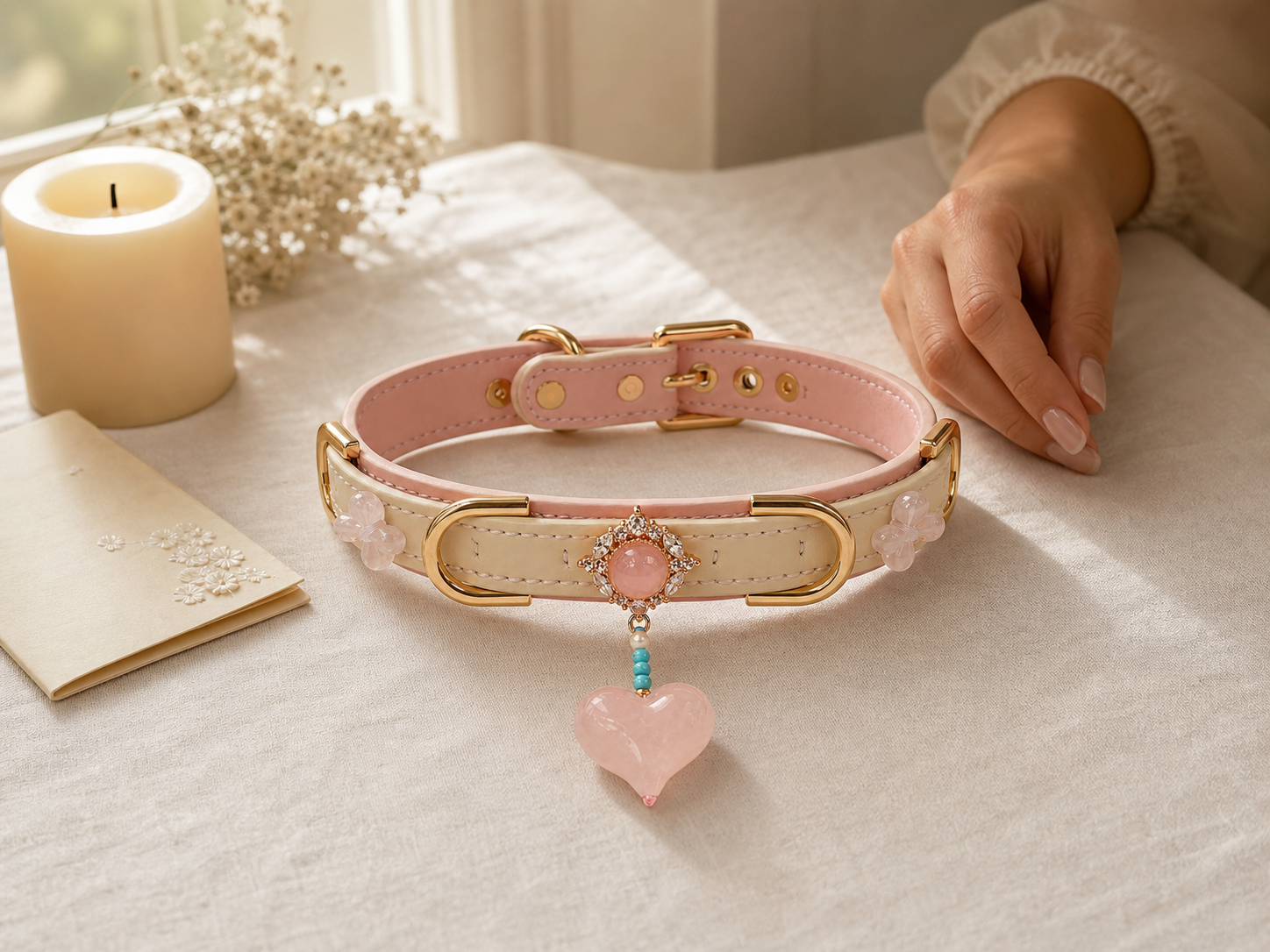
A ritual does not need an audience. You might choose a quiet room, read a short statement of intention, review boundaries together, exchange the collar, and schedule a future check-in. Some people add a written agreement; others prefer a few spoken sentences.
Keep the ritual proportional to the commitment. If the collar marks a new or exploratory stage, leave room for change. If it marks a long-term commitment, discuss what removal, replacement, travel, repairs, and privacy will mean before the ceremony.
Caring for a collar
- Wipe the lining after wear with a method suitable for the material.
- Keep perfume, oils, and harsh cleaners away from plated hardware and decorative stones.
- Allow the collar to dry fully before storing it.
- Store it flat or loosely curved so the strap and embellishments are not crushed.
- Inspect stitching, closures, rings, and charms before each use.
Frequently asked questions
Is a BDSM collar always a sign of ownership?
No. It may represent ownership for people who explicitly choose that meaning, but it can also mean trust, commitment, style, play, or self-expression.
Can a collar be worn every day?
Yes, if its design, fit, materials, and care needs suit extended wear. Remove it when irritation develops and avoid sleeping or exercising in a collar unless the maker specifically considers that use.
How tight should a collar be?
Secure, but never constricting. The wearer must be able to breathe, swallow, speak, and move normally. Use the maker’s sizing guidance rather than relying on a universal rule.
Does every XESODIT collar include a leash?
Yes. Every XESODIT collar includes a matching leash.
How long does a handmade XESODIT collar take?
Please allow approximately 2–3 weeks for production and delivery.
Further reading
For a practical framework for consent and boundaries, read RAINN’s guide to consent. For communication ideas, see Planned Parenthood’s guide to talking with a partner.
This article is educational and is not medical advice. Prioritize comfort, communication, and immediate removal whenever a collar causes concerning symptoms.