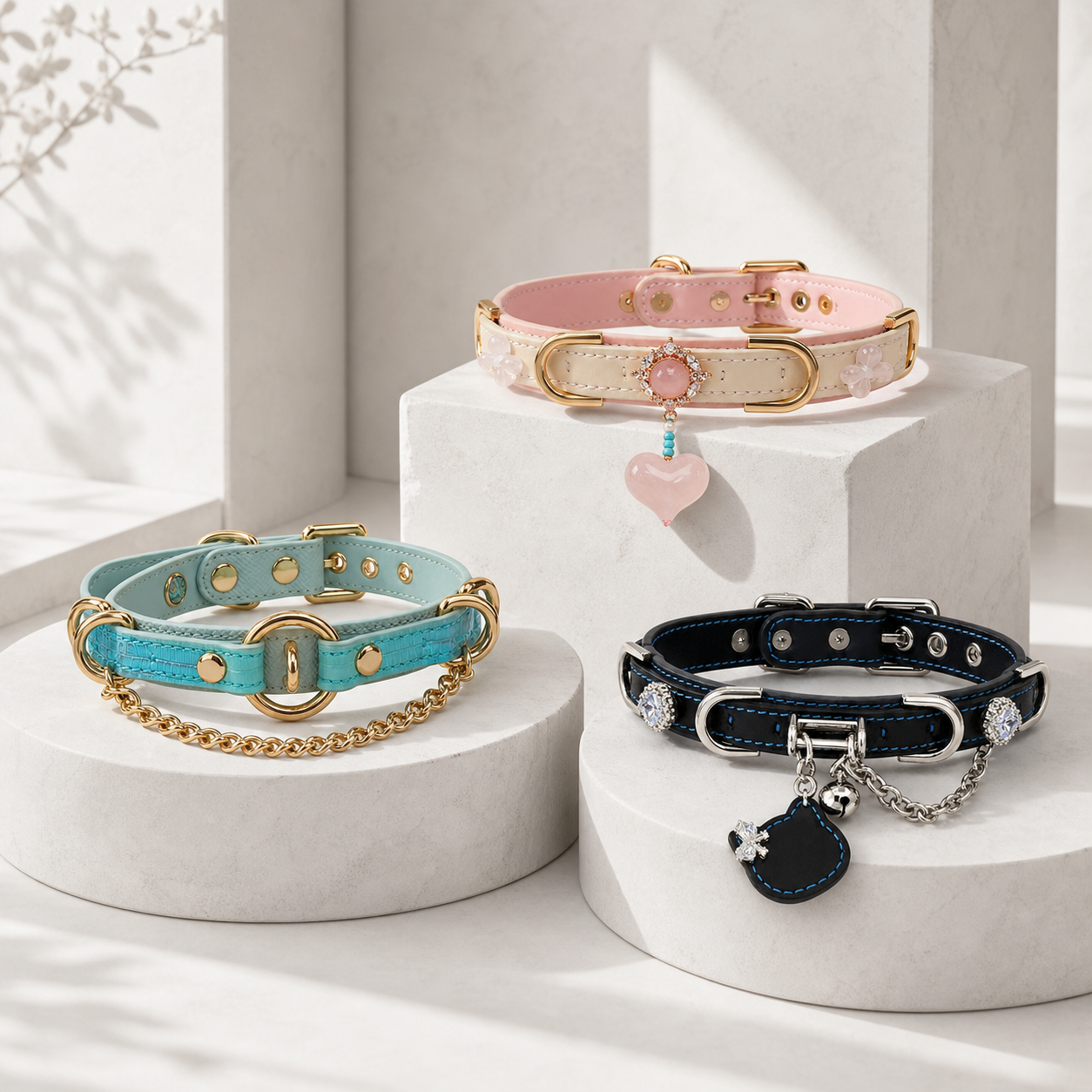
A BDSM collar can be a piece of fashion, a practical part of a scene, a private symbol, or all three. Its meaning does not come from the hardware alone. It comes from the person wearing it and the conversations that surround it.
Quick answer: there is no single universal BDSM collar meaning. A collar may represent play, identity, trust, commitment, self-expression, or a transition into a negotiated dynamic. Never assume what someone else's collar means, and never treat it as permission to touch the person or the collar.
What does a BDSM collar mean?
For some adults, fastening a collar marks the beginning of a scene and helps create a deliberate shift in attention. For others, wearing one is a continuing reminder of a relationship, promise, or personal identity. Some people simply enjoy the look of polished rings, soft straps, chains, charms, and jewelry-inspired details.
All of those uses can be valid. A collar is not a contract by itself, and it does not communicate consent to strangers. The people involved decide what it means, when it is worn, who may touch it, and how it can be removed.

What are the main types of BDSM collars?
Play collars
A play collar is usually worn during a specific scene or private ritual. It may have a front or side ring for an accessory, but fit and comfort still matter more than visual drama. The collar can help define when a scene starts and ends, provided everyone has agreed on that meaning.
Day collars
A day collar is designed to feel discreet enough for ordinary life. It may resemble a choker or statement necklace and can offer a private sense of connection without disclosing a dynamic to coworkers, relatives, or strangers.
Symbolic or commitment collars
Some partners use a collar to represent an ongoing agreement, trust, or commitment. They may compare the emotional weight to another piece of relationship jewelry, but the expectations should be discussed explicitly rather than borrowed from someone else's tradition.
Consideration or training collars
In some communities, these labels describe stages in a developing power-exchange relationship. They are customs, not universal rules. If the words feel useful, define what they mean in your own relationship, including duration, boundaries, and the right to end the arrangement.
Self-collaring
A person does not need a partner to choose a collar. Self-collaring can represent self-knowledge, confidence, personal ritual, aesthetic pleasure, or a chosen headspace. The meaning belongs to the wearer.
Pet-play and decorative collars
Tags, bells, bows, hearts, butterflies, or animal-inspired charms can support a playful aesthetic. Decorative features do not define the wearer's role, gender, relationship status, or interests. Ask instead of assigning a story.
Do collar materials change the meaning?
Material changes the experience more reliably than it changes the symbolism. Soft lined straps can feel warm and approachable. Polished metal can feel minimal and ceremonial. Silicone may be easier to clean. Jewelry-inspired collars can move between fashion and private ritual.
Choose for skin comfort, expected wear time, cleaning needs, closure access, and the weight of the hardware. If you have sensitive skin, test a new material for a short period before extended wear. Read the product description rather than assuming every gold-tone or silver-tone component has the same composition.
What do rings, locks, chains, and charms communicate?
A front O-ring may be decorative or may serve as an attachment point. A lock can feel private and symbolic. A chain can add movement and light. A heart, bell, butterfly, or jewel can make the piece feel more personal.
None of these elements creates consent. If hardware will be used functionally, discuss exactly how. Keep attachments light, avoid neck pressure, and maintain a fast way to remove the collar. Never use a collar for suspension, choking, or breath restriction.
What is respectful collar etiquette?
- Do not touch. Ask before touching another person's body, collar, tag, chain, or lock.
- Do not assume. A collar does not reveal who is partnered, available, dominant, submissive, or interested in conversation.
- Protect privacy. Do not identify or discuss someone's dynamic in front of people who have not been invited into that information.
- Use the wearer's language. If someone describes the collar as fashion, self-expression, or commitment, accept that definition.
- Respect removal. A person can remove a collar or change its meaning. Consent and identity are not frozen by an object.
What should partners discuss before choosing a symbolic collar?
Start with meaning: is this for scenes, everyday wear, a relationship milestone, or personal expression? Then discuss visibility, workplace and family settings, who keeps any key, when the collar comes off, medical and travel needs, and what removal does or does not mean emotionally.
If you want to mark the decision with a private ritual, keep the conversation more important than the performance. Our guide to collaring ceremonies and consent offers a simple framework.
How do you choose a collar that matches its purpose?
- Define whether the collar is decorative, symbolic, functional, or mixed-purpose.
- Measure carefully and check the product's verified adjustable range.
- Consider wear time, lining, width, weight, closures, and skin sensitivity.
- Choose details that feel authentic to the wearer rather than following a supposed hierarchy.
- Agree on removal, storage, cleaning, and any use with a matching leash.
For fit details, use the XESODIT BDSM collar sizing guide.
Frequently asked questions
Does wearing a BDSM collar mean someone is owned?
No. Some adults use ownership language in a consensual dynamic, while others wear collars for play, fashion, identity, or self-expression. Only the wearer can define the meaning.
Can a single person wear a collar?
Yes. Self-collaring can be an intentional personal ritual or simply an aesthetic choice. A partner is not required.
Is it rude to ask about someone's collar?
A respectful, private question may be welcome in the right context, but no one owes an explanation. Do not touch it, make assumptions, or ask in a way that exposes private information.
Is a collar automatically sexual?
No. The same object can be fashion, relationship symbolism, identity, role-play gear, or practical equipment. Context and consent determine its use.
Explore XESODIT collars
Discover jewelry-inspired details, hand-finished straps, and matching leashes in the XESODIT collar collection.
Sources and further reading
This original article was informed by the range of community meanings and etiquette topics discussed in BeMoreKinky's overview of BDSM collars. XESODIT has independently written and structured this guide for our readers.